


 Suzuki Marine
 Suzuki Motorcycles

Will your next car be electric? If you’re considering an EV, or just curious about the future of driving, here’s your guide to electric cars and their benefits. While designed to deliver the same everyday ease as a petrol car, EVs offer advantages like lower running costs, zero emission driving, quiet operation, and the instant torque and responsiveness that make them so much fun to drive. As the Suzuki EV range grows, see how Suzuki brings fun, reliability and freedom to our upcoming electric cars in Australia.
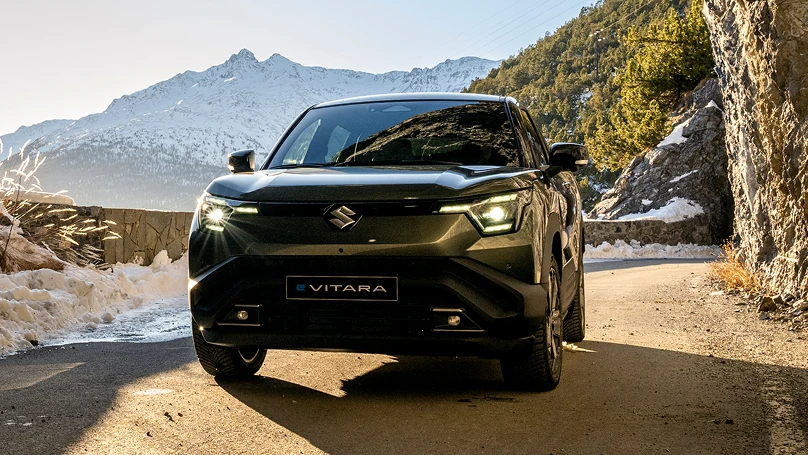
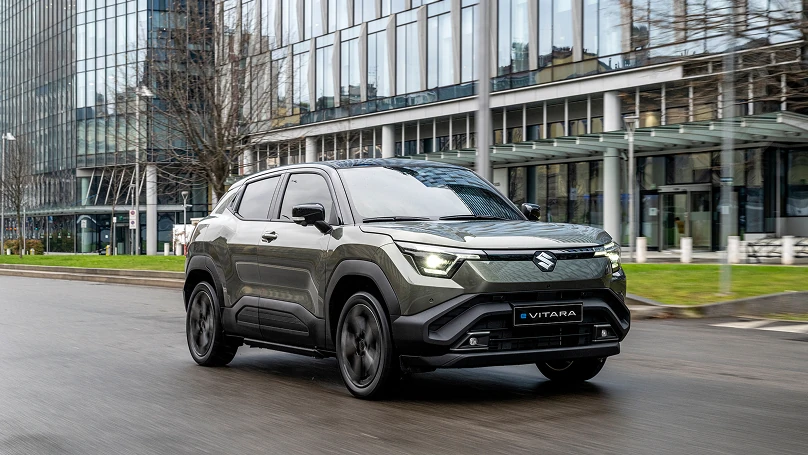
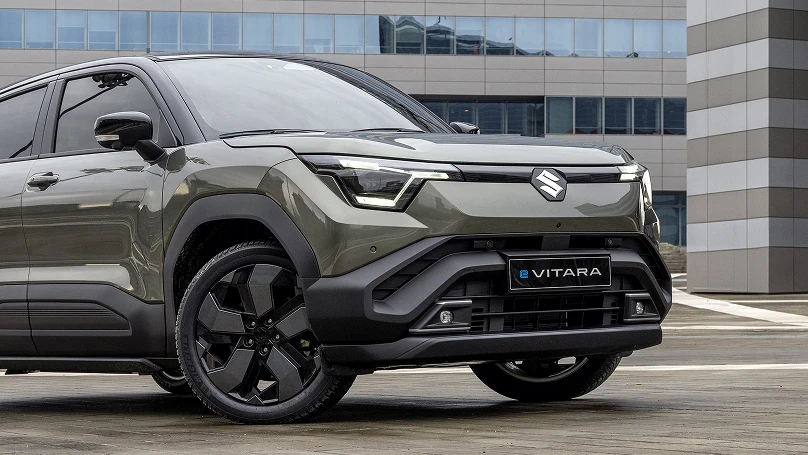
Arriving in 2026, the e Vitara is Suzuki’s first mass-produced battery electric vehicle (EV) for Australia. A 100% electric-powered SUV that combines Suzuki’s 4x4 DNA with the advanced features of the world’s latest electric vehicles.
...Read moreIts BEV powertrain creates a smooth and responsive driving experience, while the electric 4WD system ALLGRIP-e provides powerful performance on and off-road.
Keen to know more about e Vitara? You’ll be able to register your interest soon to stay up to date with vehicle and launch info.
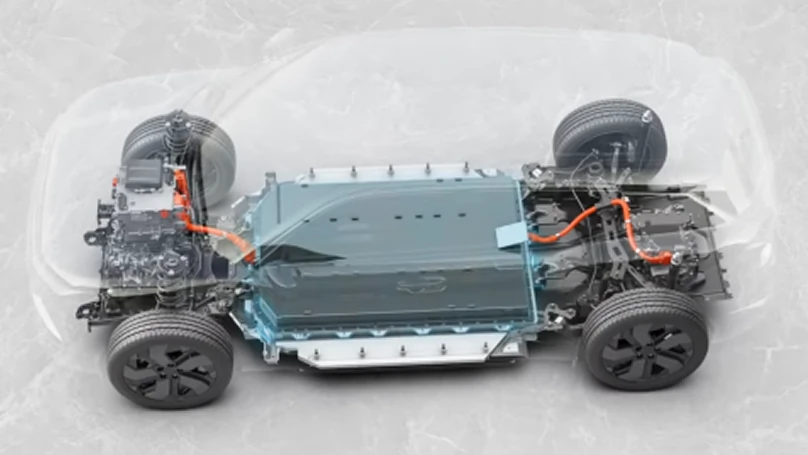
Suzuki’s electric vehicles, including the e Vitara, are built on the new HEARTECT-e platform – an evolution of Suzuki’s renowned lightweight and rigid HEARTECT architecture.
...Read morePurpose-designed for the unique needs of electric cars and their batteries, the HEARTECT-e platform enhances performance, efficiency and safety.
Key benefits of HEARTECT-e include:
Without a bulky combustion engine, there’s room to rethink the EV interior. Suzuki’s HEARTECT-e EV platform has a longer wheelbase that allows for an expansive, modern cabin featuring a digital cockpit, ambient lighting and premium features. A futuristic and spacious interior that makes every journey a joy.
Smoother, more responsive driving experience aside – no tailpipe and no driving emissions is an EV advantage everyone loves. 100% electric power makes e Vitara a cleaner, greener, meaner way to drive. Charge your electric engine at home, or on the go at one of thousands of charging stations all over Australia.
The advanced EV driving experience goes beyond the road. The e Vitara is decked out with a suite of advanced driver assistance safety features including Automatic Emergency Braking, Lane Keep Assist, Lane Departure Prevention, Adaptive Cruise Control and Rear Cross Traffic Alert, on top of parking sensors and camera.
EVs deliver that smile-inducing instant torque, taken to the next level in e Vitara with ALLGRIP-e. For adventurous drivers – and those who just like control – ALLGRIP-e provides powerful all-wheel-drive performance, with dual independent axles allowing precise torque distribution in a range of driving modes. One pedal driving helps recapture lost energy from braking and accelerating, giving you longer range and more smiles before recharging.
Driving an affordable, reliable Suzuki is already a savvy way to reduce your running costs. But it might surprise you to learn that with no combustion engine, electric vehicles require less maintenance, which means lower running costs. Double win for the e Vitara. Servicing is still important for safety checks, software updates and general wear and tear like tyres.
Electric cars (EVs) run on electricity instead of fossil fuels like petrol or diesel. They’re powered by an electric motor and a rechargeable battery. When you accelerate, energy from the battery drives the motor which turns the wheels, quietly and efficiently, with zero tailpipe emissions.
A Battery Electric Vehicle (BEV) is a fully electric car that runs purely on battery power. It doesn’t have a petrol engine, so it produces no exhaust emissions (or tailpipe). You charge it by plugging it into a power source, just like charging a phone or laptop.
A BEV is different to a Plug-in Hybrid Electric Vehicle (PHEV) which has both an electric and petrol engine.
Charging time depends on the size of the battery and the type of charger you use. A standard power outlet may take 12 – 24 hours to charge an EV. A home wall charger can take between 6 – 10 hours for a full charge, while a public DC fast charger can top up most batteries to 80% in around 30 – 45 minutes.
You can charge an electric car at home, at work, or at thousands of public charging stations across Australia. Home charging is usually done overnight, while public chargers are found in shopping centres, service stations and car parks for convenient top-ups on the go.
Electric cars require less maintenance than petrol vehicles because they have fewer moving parts. There’s no need for oil changes or exhaust system checks, but you’ll still need to service brakes, tyres, and software updates regularly to keep everything running smoothly.
Yes. Electric cars convert around 85 – 90% of the energy from the battery into motion, compared to only about 20 – 30% for petrol engines. That means less waste and more efficient use of energy every time you drive.
Although the upfront cost can be higher, electric cars are typically cheaper to run and maintain. Electricity is generally less expensive than fuel, and with fewer parts to service, long-term maintenance costs are lower. Plus, government incentives and reduced emissions can make ownership even more cost-effective.
EV range, or distance per charge, varies by model, engine power and battery size. It also depends on your driving style, and whether you drive mostly on short city trips, or longer, higher-speed distances such as freeways. These factors can make a big impact on the real-world range of your electric vehicle.
Electric cars in Australia have a wide range of charging options. At home, you can plug into a regular power outlet for a slow, low-power ‘trickle charge’, or install a wall charging unit for higher power and faster charging. On the road, public charging stations at shopping centres, service stations and car parks offer fast or ultra- fast charging for a quick top-up on longer journeys.
Overseas model shown throughout.

YOUR TEST DRIVE AWAITS!
We'll be in touch soon to arrange a time for you to get behind the wheel of your favourite Suzuki.