

 Suzuki Marine
 Suzuki Motorcycles
common hybrid car myths debunked

Most hybrid car myths come from treating every hybrid as one in the same. A hybrid is simply a petrol engine working with an electric motor and battery, but how much the electric side does varies a lot and from brand to brand. Below, we delve into the main types and test eight common myths against the actual facts.
What is a hybrid car?
A hybrid car combines a petrol engine with an electric motor and a battery. The battery recharges through regenerative braking, which captures energy normally lost as heat when you slow down, and from the engine itself. That’s why most hybrids never need to be plugged in. You refuel with petrol, just like any other car.
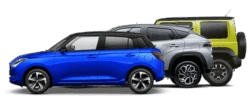
The Suzuki hybrid range uses mild hybrid technology, explained below.
What are the different types of hybrid cars?
There are three main types of hybrid car, and the differences explain most of the myths that follow.
|
Type |
Plugs in? |
Drives on electric power alone? |
How the battery charges |
Best suited to |
|
Mild hybrid |
No |
No – the motor assists the petrol engine |
Braking energy and the engine |
Drivers who want lower fuel use with no change to how they drive or refuel |
|
Full (‘self-charging’) hybrid |
No |
Yes, for short distances at low speed |
Braking energy and the engine |
Heavy stop-start city driving |
|
Plug-in hybrid (PHEV) |
Yes (optional) |
Yes, for a limited electric range |
Plugging in, braking energy and the engine |
Drivers with home charging and short daily trips |
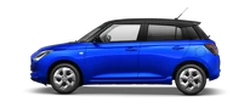
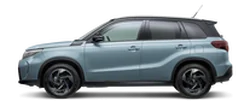
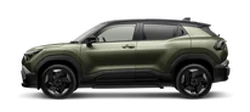
The Swift Hybrid and Vitara Hybrid are mild hybrids. They use an integrated starter generator, a compact electric motor that helps the petrol engine and recharges a small lithium-ion battery. If you’d rather leave petrol behind altogether, the e VITARA is Suzuki’s fully electric SUV.
The truth about hybrid cars: fact vs myth
Myth 1: Hybrid cars need to be plugged in
Verdict: Myth.
Only plug-in hybrids have a charging port. Mild and full hybrids recharge themselves through regenerative braking and the petrol component of the engine. In a Suzuki mild hybrid, the integrated starter generator turns the energy of the car slowing down into electricity and stores it in a compact lithium-ion battery. You never plug it in, and you refuel at any petrol station.
Myth 2: Hybrid batteries wear out quickly and cost a fortune to replace
Verdict: Myth.
Hybrid batteries are designed to last for a long period of time. A battery management system keeps the charge within a set range, which limits wear. Mild hybrid batteries are also far smaller than those in full hybrids or electric vehicles, because their job is to assist the engine, not drive the car. For details of what’s covered, see Suzuki warranty.
Myth 3: Hybrids are expensive to service
Verdict: Myth.
Suzuki hybrids follow a standard service program, much like their petrol equivalents, with no special charging hardware to maintain. Regenerative braking can also reduce brake wear. That benefit is seen as the greatest asset in full hybrids, which do more of their slowing electrically, and smaller in mild hybrids. To see what servicing costs, check Suzuki capped price servicing.
Myth 4: All hybrids can drive on electric power alone
Verdict: Myth.
Only full and plug-in hybrids have that ability. In a mild hybrid like the Swift Hybrid, the petrol engine always drives the wheels. The electric motor assists the engine when you pull away and accelerate, and it makes idle stop-start smoother, restarting the engine quietly when you release the brake. That’s how a mild hybrid uses less fuel without changing how the car drives.
Myth 5: Hybrids only save fuel in the city
Verdict: Partly true.
Hybrids save the most fuel in stop-start traffic, where regenerative braking and idle stop-start do the most work. When driving on a freeway there’s less braking to recover energy from and fewer stops, so savings are smaller. Compare a model’s official urban and extra-urban fuel consumption figures on the Green Vehicle Guide to see the differences.
Myth 6: Hybrids are slow and boring to drive
Verdict: Partly true.
It depends on the type of hybrid. Electric motors deliver their torque instantly, so full hybrids often feel brisk when taking off. A mild hybrid’s motor is smaller and is there to make the engine smoother and more efficient, not faster. What you notice in a mild hybrid is a smoother take-off and quieter restarts in traffic. Driving one is otherwise just like driving a petrol car.
Myth 7: Hybrids are too expensive to buy
Verdict: Myth for most buyers.
Hybrid technology was once limited to premium models, but it’s now available in the light car segment. That puts a hybrid within reach of drivers shopping for an everyday hatchback. See Swift Hybrid pricing to compare.
Myth 8: Hybrid batteries can’t handle Australian heat
Verdict: Myth.
Hybrid batteries are temperature-managed. The battery management system monitors temperature and keeps the battery working within a safe range, whether you’re parked in the sun on a 40-degree day or driving long distances in regional Australia. Like any car, a hybrid benefits from shade in summer, but heat doesn’t stop the system doing its job.
Is a hybrid car right for you?
A hybrid suits you best if most of these apply:
You mostly drive around the inner city: Urban or suburban driving with regular stop-start traffic is where a hybrid thrives.
You can’t charge at home: Mild and full hybrids never need plugging in, so they suit apartments and street parking.
You don’t want to change your routine: You get lower fuel use while driving and refuelling exactly as you do now.
Be realistic about the highway: If most of your driving is long distance, a hybrid’s savings will be minimal.
The best way to judge is to get behind the wheel yourself, so book a Suzuki test drive.
FAQs
What happens if a hybrid battery goes flat? In everyday driving, it shouldn’t happen. The system recharges the hybrid battery continually through braking and the engine, and the battery management system stops it running too low. If a hybrid system warning light ever appears, have the car checked by your Suzuki dealer.
Is a self-charging hybrid the same as a mild hybrid? No. “Self-charging hybrid” usually describes a full hybrid, which can drive short distances on electric power alone. A mild hybrid also charges itself, but its motor only assists the petrol engine. Neither needs to be plugged in.
What fuel does a hybrid car use? Regular unleaded petrol, like most petrol cars. Mild and full hybrids run on petrol alone and recharge their batteries as you drive. Check your owner’s manual or the fuel filler flap for the minimum octane your model needs.
Do hybrid cars have lower emissions than petrol cars? Generally, yes. Because a hybrid uses less fuel, it produces less carbon dioxide from the tailpipe than a comparable petrol car. The reduction is largest in full and plug-in hybrids and more modest in mild hybrids. You can compare official CO2 figures by model on the Green Vehicle Guide.
Ready to try a hybrid?
Now you know what a mild hybrid does and what it doesn’t, see how it feels on your own roads.