






 Suzuki Marine
 Suzuki Motorcycles
what is regenerative braking in electric cars?

Lift your foot off the accelerator in an EV or hybrid and something unexpected happens: the car starts slowing down on its own, well before you’ve touched the brake pedal. Most drivers have felt this subtle drag, but few know exactly what’s causing it.
That feeling is regenerative braking at work, one of the clever pieces of technology that makes electric cars more efficient than their petrol-only counterparts. Here’s what it is, how it works, and why it matters.
What is regenerative braking?
Regenerative braking is a system that captures the kinetic energy generated when a car slows down and turns it into electricity, rather than letting it disappear as heat.
Traditional braking relies on friction brake pads pressing against discs to physically slow the wheels, with all that energy wasted as heat. Regenerative braking takes a different approach, using the car’s own electric motor to slow the vehicle down while feeding usable energy back into the battery. It’s a small shift in engineering with a real impact on range, running costs and day-to-day driving feel.
How does regenerative braking work?
Regenerative braking happens in a few quick steps every time you ease off the accelerator or press the brake pedal:
- The driver lifts off the accelerator or presses the brake pedal, the trigger that tells the car’s control system you want to slow down.
- The electric motor switches into generator mode. Normally the motor draws electricity from the battery to spin the wheels forward. During braking, this reverses: the wheels turn the motor, generating electricity instead of consuming it.
- The resistance created by the motor acts against the wheels, slowing the car down. As the motor generates electricity, it pushes back against the spinning wheels, and that resistance is what you feel as the car decelerates.
- That resistance converts the car’s forward momentum into an electrical current, instead of dissipating it as heat through the brake pads.
- The electricity generated is sent back and stored in the battery for later use, effectively refuelling it during everyday driving, ready to power the motor again next time you accelerate.
The result is a braking system that recovers energy that would otherwise be lost, while still bringing the car to a smooth, controlled stop with the help of traditional friction braking when needed.
Strong braking and light braking
Not all regenerative braking feels the same. Many EVs and hybrids let you choose how strongly the system slows the car when you lift off the accelerator, often through paddles on the steering wheel or a drive mode selector. A lighter setting feels closer to coasting in a petrol car, while a stronger setting recovers more energy and does more of the slowing for you. It means the same car can be tuned to suit a relaxed highway cruise or stop-start city traffic.
Does it work in hybrid cars too?
Hybrid cars use the same principle. Hybrids capture energy during deceleration and feed it back into their battery to support the electric motor, one of the key ways hybrids reduce fuel consumption in everyday driving.
Suzuki’s hybrid range puts this to work across the line-up. The Vitara Hybrid and Swift Hybrid both use regenerative braking to top up their battery on the move, while the Fronx Hybrid pairs it with smart technology like automatic engine stop-start and a 12V lithium-ion battery to reduce fuel use.
Benefits of regenerative braking
Extended range
By recovering energy during braking, regenerative braking helps stretch a vehicle’s driving range further between charges or fuel stops.
Reduced brake wear
Because the electric motor handles much of the slowing down, traditional brake pads and discs experience less wear over time, which can mean fewer trips to the mechanic for brake replacements.
Smoother driving
Regenerative braking often creates a more gradual, predictable deceleration, which many drivers find smoother and easier to modulate in traffic.
What is one-pedal driving?
One-pedal driving is what happens when regenerative braking is strong enough to slow the car and sometimes bring it to a complete stop using only the accelerator pedal. Rather than switching between accelerator and brake, you simply ease off to slow down and press down to speed up. It’s a driving style many EV owners come to love once they get the hang of it, and it’s a feature available in Suzuki’s e VITARA.
Explore the e VITARA
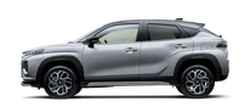
Suzuki’s e VITARA brings regenerative braking and one-pedal driving together in a fully electric SUV package, built on the all-new HEARTECT-e platform and available now in Motion and Ultra variants.