 Suzuki Marine
 Suzuki Motorcycles
awd vs 4wd – which reigns supreme?

It’s ok if you thought AWD and 4WD were the same thing. Many car companies throw these terms around and don’t really explain what they mean, what makes them different, and if one is better than the other. We’re here to fix that!
AWD means All-Wheel Drive. This is a type of wheel drive system that can send power to all four wheels. 4WD on the other hand means Four-Wheel Drive and this is a wheel drive system can send power to both front and rear axle wheels.
Ok sounding the same, but we swear they are different!
Whilst both power all four wheels, AWD cars will often automatically send that power to certain wheels that need more grip, say if they hit a wet patch or a sharp corner on paved roads.
4WD cars, however, will send equal amounts of power to the front and back wheels through a more complex system that usually needs to be manually switched on and can take on the ups and downs of more extreme off-roading.
That’s a very top line explanation, so let’s get under the chassis and really understand how they work.
So, what exactly is AWD?
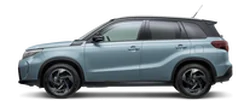
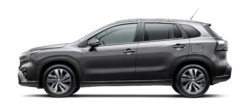
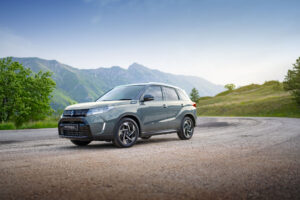
AWD is a wheel drive system that powers all four wheels to allow more traction on the road. When engaged, the wheels move at different speeds to stop overspin, especially when going around corners. Our small SUVs, like the mighty and modern Vitara and the bold and stylish S-CROSS, use this intuitive system for a more stable driving experience.

Many AWD cars are usually in what you might call ‘part time AWD’ mode. That means that they act like a front or rear wheel drive, where only one set of wheels are getting power. The ‘all-wheel’ part usually kicks in when smart computer sensors notice a loss of traction. The engine then splits the torque, sending that power to the wheels that need it, to give the car better grip on the road.
Advantages of AWD
With improved traction and the greater stability of all four wheels receiving power when called for, AWD have the added layer of safety. So, when you face tougher road conditions such as wet surfaces, snowy roads, or loose gravel compared to just driving on dry pavement, you can feel more in control. While not necessarily faster, AWD have better acceleration because the wheels all accelerate at the same time and there’s no extra wheel spin when pressed hard.
Limitations of AWD
Because they are usually lighter and lower to the ground, AWDs are more likely to get stuck on things like rocks and tree stumps and can’t go on terrains like deep sand or thick mud. They often don’t have a central differential lock which is crucial to helping the wheels get over uneven road.
AWDs are also not as fuel efficient because of the extra weight of the wheel drive system, as the engine needs more power and fuel to activate all four wheels.
Ok, so what is 4WD then?
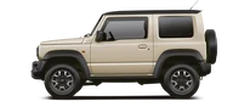
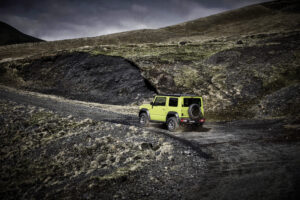
4WD is a drive system that also engages both the front and rear axles, however, instead of sending power to the wheels that need it most, 4WD works by dividing the torque between the wheels. Most 4WDs, like our legendary 4WD Jimny, also have high and low-range gearing to help navigate rough terrain. These can be controlled by the driver and is activated though a transfer case, which is the gearbox that sends power to both axle sets.
Advantages of 4WD
4WD vehicles are built to be higher and are much heavier too, so they can withstand more extreme road conditions and terrains. Getting over those rough roads is done thanks to the central differential lock system. This system sends torque to least one front and rear wheel, so when you’re lifting and slipping in mud, the car can still control wheelspin. It powers the wheels that need it by mechanically locking and rotating them at the same speed. This system is why 4WD vehicles still go forwards even with one tire off the ground.
With greater tow bar strength and more suspension room, plus the extra grip and road traction, 4WDs are also better suited to towing things like heavy trailers or caravans.
Limitations of AWD
Many 4WDs aren’t very fuel efficient simply due to their sheer weight and size, but mostly it’s because of the complex wheel drive system. The engine has to work harder so more fuel is used to move the heavier vehicle.
Additionally, most everyday roads have been specially designed to have the best level of grip and traction, which 4WD vehicles don’t actually like, meaning they are not the safest to drive on dry pavement and aren’t a great suburban vehicle. All that extra power is much better suited for low-traction roads like rugged inclines and wet surfaces.
Key Differences Between AWD and 4WD
Drive Mechanism
The major difference between AWD and 4WD is the differential systems. In an AWD, when a wheel loses traction, an open differential will push torque to the wheel with the least resistance. However, a 4WD will lock the drive differential, so if one wheel lifts up, the other is still pushing.
AWD vehicles also don’t often have a transfer case switch. They instead engage or disengage automatically based on driving conditions through sensors. 4WDs usually require manual changes into gears and the on-and-off of the central diff locking.
When to use which drive type?
As mentioned, AWD are much more comfortable on paved, suburban roads as they automatically engage all four wheels when immediate traction is needed like merging into traffic. 4WDs however, thrive in off-road conditions and facing difficult or uneven terrains.
Similarities between AWD and 4WD
Traction improvement
Both AWD and 4WD have the ability to engage all four wheels, giving greater traction on the road compared to just front or rear-wheel drive. This extra grip is useful in most driving scenarios like heavy rain or snow for the AWD and on back country roads for the 4WD.
Enhanced stability
Because power is sent to all four wheels, AWD and 4WD vehicles have much better control, grip, and stability on their preferred roads, especially in bad weather or off-road terrains. This extra stability means added safety when driving, and an overall better driving experience.
So, which one is best? Well, that really depends on you and what you will be mainly using the vehicle for!
In short, small SUV AWDs are good for city driving and minor off-road use like gravel or wet pavement, where 4WDs are more suited for those epic rough terrain adventures.
Not sure what will work best for you? Book a test drive today and experience our small SUVs or 4WD models for yourself!